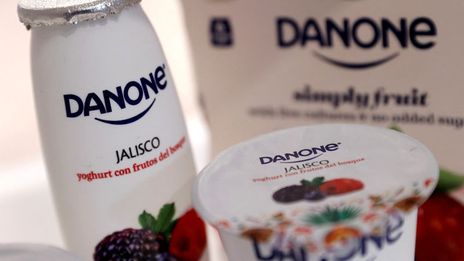
Danone may finally acquire Mead Johnson, the American infant nutrition specialist once courted by the French group, although ultimately bought by Reckitt Benckiser. According to La Lettre, negotiations are currently underway.
Danone is "discreetly exploring" a buyout of the Reckitt subsidiary alongside American investment bank Centerview Partners, according to La Lettre. The British group put $17bn on the table in 2017 to acquire Mead Johnson. However, nearly a decade later, the diversification strategy has failed to meet its objectives. Impairments, divestments, and US lawsuits have plagued the unit in recent years, creating a compelling opportunity for Danone. It should be noted, however, that this rumor resurfaces periodically.
Danone, which has a market capitalization of €44bn, has returned to fighting form in recent years following a period of stagnation. The group has recently resumed its acquisition strategy. At Reckitt, Mead Johnson accounts for only 15% of total revenue (GBP 2.1bn).
Danone is one the world leading food-processing groups. Net sales break down by family of products as follows:
- dairy products and plant products (48.2%; No. 1 worldwide): fresh fermented milk products, creams, products and drinks of plant origin (based in particular on soya, almond, hazelnut, rice, oats and coconut);
- specialized nutrition products (34%): baby foods (No. 2 worldwide; foods for infants and young children in addition to breastfeeding) and medical nutrition products (foods for people suffering from certain pathologies or people weakened by age);
- bottled water (17.8%; No. 2 worldwide): natural water, aromatized water or enriched in vitamins (brands Evian, Volvic, Badoit, Aqua, etc.).
At the end of 2025, the group had more than 180 production sites throughout the world.
Net sales are distributed geographically as follows: Europe (35.8%), North America (23.2%), China/North Asia/Oceania (14.5%), Asia/Middle East/Africa (16.3%) and Latin America (10.2%).
This super rating is the result of a weighted average of the rankings based on the following ratings: Valuation (Composite), EPS Revisions (4 months), and Visibility (Composite). We recommend that you carefully review the associated descriptions.
Investor
Investor
This super composite rating is the result of a weighted average of the rankings based on the following ratings: Fundamentals (Composite), Valuation (Composite), EPS Revisions (1 year), and Visibility (Composite). We recommend that you carefully review the associated descriptions.
Global
Global
This composite rating is the result of an average of the rankings based on the following ratings: Fundamentals (Composite), Valuation (Composite), Financial Estimates Revisions (Composite), Consensus (Composite) and Visibility (Composite). The company must be covered by at least 4 of these 5 ratings for the calculation to be carried out. We recommend that you carefully review the associated descriptions.
Quality
Quality
This composite rating is the result of an average of rankings based on the following ratings: Returns (Composite), Profitability (Composite) and Quality of Financial Reporting (Composite), and Financial Health (Composite). The company must be covered by at least 2 of these 3 ratings for the calculation to be performed. We recommend that you carefully read the associated descriptions.
ESG MSCI
ESG MSCI
The MSCI ESG score assesses a company’s environmental, social, and governance practices relative to its industry peers. Companies are rated from CCC (laggard) to AAA (leader). This rating helps investors incorporate sustainability risks and opportunities into their investment decisions.